
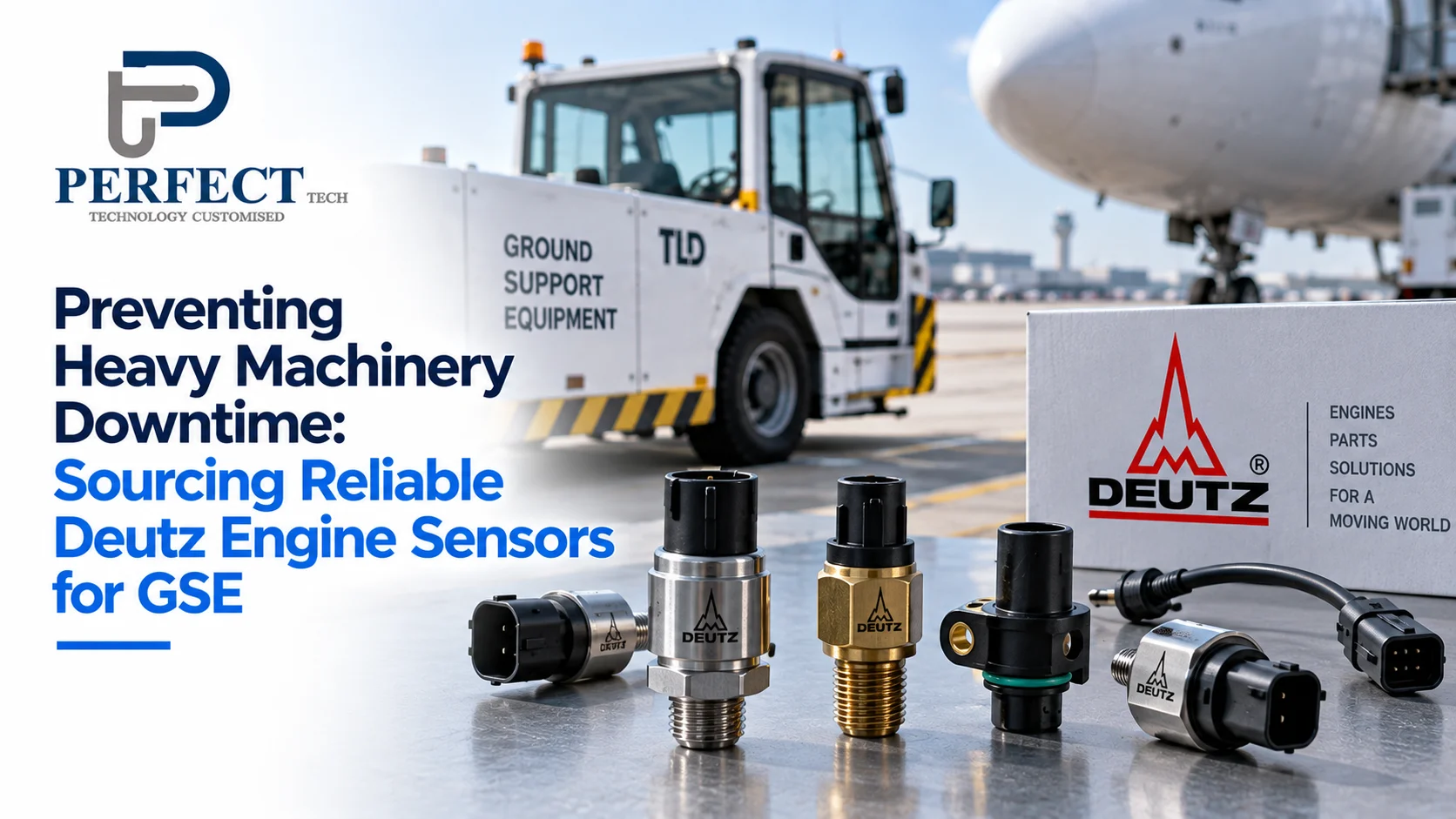
Heavy machinery and Ground Support Equipment (GSE) depend on accurate engine monitoring to operate safely and efficiently. A small sensor failure can trigger warning alarms, incorrect readings, reduced engine performance, or even an unnecessary shutdown.
For airport GSE fleets, industrial equipment operators, and maintenance teams, sourcing the correct Deutz engine sensors for GSE is therefore an important part of preventive maintenance and spare-parts planning.
A sensor may be a relatively small component, but it provides critical information to the engine control system. When that information is inaccurate or unavailable, technicians may have difficulty diagnosing the actual problem.
What Are Deutz Engine Sensors?
Deutz engines use different sensors to monitor operating conditions and provide information to the engine control or monitoring system.
Depending on the engine model and configuration, sensors may monitor:
- Engine coolant temperature
- Oil pressure
- Engine speed
- Crankshaft position
- Camshaft position
- Intake air temperature
- Intake or boost pressure
- Fuel pressure
- Exhaust-related parameters
- Engine operating conditions
The exact sensors installed depend on the specific engine and application.
For this reason, the correct replacement should always be identified using the engine model, serial number, and original component information.
Why Engine Sensors Matter in GSE
Ground Support Equipment operates in demanding airport environments.
Equipment can experience:
- Frequent starts and stops
- Variable loads
- Long operating periods
- Vibration
- Dust
- Temperature changes
- Moisture
- Tight turnaround schedules
Reliable sensor signals allow the engine management system and operators to monitor important operating conditions.
A faulty sensor can potentially contribute to:
- Incorrect warnings
- Poor engine performance
- Difficult starting
- Increased fuel consumption
- Reduced operating efficiency
- Unnecessary shutdowns
- Diagnostic difficulties
For fleet operators, these problems can translate into equipment downtime.
Common Types of Deutz Engine Sensors
1. Coolant Temperature Sensors
A coolant temperature sensor provides information about engine temperature.
An inaccurate temperature signal can affect engine monitoring and, depending on the control system, engine operation.
Possible symptoms of a sensor problem include:
- Incorrect temperature readings
- Warning alarms
- Unusual engine behavior
- Diagnostic fault codes
- Cooling-system-related warnings
However, technicians should also check the cooling system itself before concluding that the sensor has failed.
2. Oil Pressure Sensors
Oil pressure monitoring helps identify whether the engine lubrication system is operating within the expected range.
A faulty oil-pressure sensor can create:
- False low-pressure warnings
- Incorrect dashboard readings
- Diagnostic codes
- Unnecessary shutdown conditions on applicable systems
Before replacing the sensor, maintenance personnel should verify actual oil pressure using the manufacturer’s recommended diagnostic procedure.
3. Engine Speed Sensors
Speed sensors provide information about engine rotational speed.
Depending on the engine configuration, speed-position sensors may be involved in:
- Engine timing
- Fuel control
- Starting
- RPM monitoring
- Electronic engine management
A failed speed signal can cause significant operating problems, including difficult starting or an engine that does not run correctly.
4. Crankshaft and Camshaft Position Sensors
Position sensors help the engine control system determine the position and rotational behavior of internal engine components.
Potential symptoms of a problem may include:
- Hard starting
- No-start condition
- Intermittent engine operation
- Fault codes
- Unstable engine performance
Because several electrical or mechanical issues can create similar symptoms, proper diagnostic testing is essential.
5. Intake Pressure and Temperature Sensors
Modern electronically controlled engines may monitor intake-air conditions.
These sensors can provide information used for engine control and performance monitoring.
A problem with an intake sensor can potentially result in:
- Incorrect readings
- Performance changes
- Warning codes
- Reduced engine efficiency
The exact effect depends on the engine’s control architecture.
Warning Signs of a Faulty Engine Sensor
Maintenance teams should investigate sensor-related faults when they observe:
Unexpected Warning Lights
A warning indicator can be the first sign of a sensor or associated wiring problem.
Incorrect Readings
If a temperature, pressure, or RPM reading does not correspond with actual operating conditions, the sensor circuit should be investigated.
Intermittent Fault Codes
Faults that appear and disappear may be caused by:
- Loose connections
- Damaged wiring
- Connector corrosion
- Sensor failure
- Vibration-related electrical problems
Difficult Starting
Starting problems can have many causes, including battery, fuel, starter, and control-system issues. Sensor signals should be checked where the diagnostic system indicates a related fault.
Unexpected Shutdowns
Some engine control systems can initiate protective actions when critical sensor inputs indicate an abnormal condition.
A shutdown should be diagnosed carefully before replacing components.
Why Correct Sensor Identification Matters
One of the biggest challenges in industrial spare-parts procurement is identifying the exact component required.
A sensor may look similar to another sensor while having different:
- Electrical characteristics
- Thread size
- Connector configuration
- Signal type
- Temperature range
- Pressure range
- Calibration
- Part number
This is why Deutz engine sensors for GSE should be sourced using complete equipment information rather than visual appearance alone.
How to Identify the Correct Deutz Engine Sensor
Before requesting a replacement, collect the following information.
Engine Information
Provide:
- Deutz engine model
- Engine serial number
- Engine configuration or arrangement information, where applicable
- Equipment manufacturer
- GSE model
Existing Sensor Information
Where available, record:
- Sensor part number
- Manufacturer markings
- Connector type
- Thread or mounting information
- Sensor photographs
Equipment Application
Explain where the engine is being used, such as:
- Baggage tractor
- Tow tractor
- Ground power equipment
- Airport service vehicle
- Industrial machine
- Construction equipment
This information can help with accurate technical part matching.
Avoid Buying Sensors Based Only on Appearance
Two engine sensors can have similar physical dimensions while producing completely different electrical signals.
For example, differences may exist in:
- Resistance characteristics
- Output signal
- Connector pin configuration
- Calibration
- Operating range
- Thread specification
Installing an incorrect sensor can result in inaccurate readings or system faults.
Always verify the component against the engine’s technical documentation.
Sensor Wiring Is Just as Important as the Sensor
A diagnostic fault does not necessarily mean that the sensor itself has failed.
Maintenance technicians should also inspect:
- Wiring harness
- Connector pins
- Ground connections
- Power supply
- Signal wires
- Connector seals
- Physical damage
Vibration and repeated equipment movement can contribute to wiring and connector problems in GSE applications.
Check for Connector Corrosion
Airport equipment can operate in environments where moisture and contaminants may affect electrical connectors.
Corroded terminals can create:
- Intermittent signals
- Increased resistance
- False diagnostic codes
- Complete signal loss
Connector condition should therefore be checked before replacing an expensive electronic component.
Preventive Maintenance for Deutz Engine Sensors
A preventive maintenance program can help identify sensor problems before they cause equipment downtime.
Inspect Sensor Connections
During scheduled maintenance, inspect accessible connectors and wiring for:
- Damage
- Loose connections
- Corrosion
- Chafing
- Contamination
Monitor Diagnostic Codes
Record recurring fault codes rather than clearing them repeatedly without identifying the underlying cause.
A pattern of recurring sensor-related faults can provide useful information for maintenance planning.
Compare Sensor Readings
Where appropriate, compare electronic readings with independent measurements using the engine manufacturer’s recommended diagnostic procedure.
This can help determine whether the sensor or the underlying engine system is responsible for the abnormal reading.
Deutz Engine Sensors for GSE: Procurement Considerations
Airport GSE fleets can contain multiple equipment models and engine configurations.
This creates additional challenges for spare-parts management.
Fleet managers should maintain records of:
- GSE model
- Engine model
- Engine serial number
- Sensor part number
- Installation location
- Replacement date
- Fault history
- Supplier information
A centralized spare-parts database can make future sensor identification much faster.
Keep Critical Sensors Available
Not every sensor needs to be stocked in large quantities.
However, fleet managers can identify critical components based on:
- Equipment importance
- Historical failure rate
- Supplier lead time
- Equipment availability
- Operational impact
- Number of compatible machines in the fleet
If a particular sensor is used across multiple GSE units and has a long procurement lead time, maintaining an appropriate spare quantity may reduce downtime.
How Sensor Failures Can Cause GSE Downtime
Consider an airport tow tractor that develops a temperature-sensor fault.
A warning may appear and the machine may be removed from service for investigation. If the correct replacement sensor is not immediately available, the tractor can remain unavailable until the part arrives.
For an airport fleet, this may require:
- Deploying another vehicle
- Rescheduling maintenance
- Increasing fleet utilization
- Delaying ground operations
Accurate spare-part identification and inventory planning can help reduce the duration of such interruptions.
Common Mistakes When Sourcing Engine Sensors
Ordering by Engine Brand Only
Knowing that an engine is manufactured by Deutz is not enough.
Better approach: Provide the exact engine model and serial number.
Matching Only the Connector
A sensor with the same connector may still have different electrical characteristics.
Better approach: Verify the complete part specification.
Ignoring the Original Part Number
The original sensor part number can be one of the most useful identification references.
Better approach: Photograph and record the original sensor label before removal where practical.
Replacing the Sensor Without Testing the Wiring
A damaged wire can produce the same fault code as a failed sensor.
Better approach: Test the complete sensor circuit according to the manufacturer’s diagnostic procedure.
Waiting Until Failure to Source a Critical Component
Emergency procurement can increase downtime.
Better approach: Identify critical sensors and establish a reliable sourcing strategy in advance.
Quality Considerations for Deutz Engine Sensors
When selecting replacement sensors, procurement teams should consider more than price.
Evaluate:
- Correct part number
- Technical compatibility
- Manufacturing quality
- Connector configuration
- Operating range
- Documentation
- Supplier reliability
- Traceability
- Availability
For critical GSE, the sensor should be appropriate for the specific engine and application.
How Perfect Tech Can Help With Deutz Engine Sensors
Perfect Tech supports industrial and aviation spare-parts sourcing for GSE, diesel engines, generators, and heavy machinery.
If you are sourcing Deutz engine sensors for GSE, provide our team with:
- Deutz engine model
- Engine serial number
- GSE manufacturer
- GSE model
- Existing sensor part number
- Sensor photographs
- Connector details
- Technical documentation
Our team can assist with technical part matching and sourcing based on your equipment configuration.
This can help procurement teams reduce the risk of ordering an incorrect sensor and simplify the process of sourcing critical engine components.
Frequently Asked Questions
What are Deutz engine sensors used for?
Deutz engine sensors monitor parameters such as temperature, pressure, speed, position, and other operating conditions, depending on the specific engine configuration.
Why are Deutz engine sensors important for GSE?
GSE often operates under demanding conditions, and accurate engine monitoring can help operators and maintenance teams identify abnormal operating conditions and diagnose faults.
How do I identify the correct Deutz sensor?
Start with the engine model and serial number. Then provide the existing sensor’s part number, photographs, connector information, and equipment model where available.
Can I replace a Deutz sensor with a visually similar sensor?
Not without verifying compatibility. Sensors with similar physical designs can have different electrical characteristics, calibration, connectors, or operating ranges.
Can a wiring problem cause a sensor fault code?
Yes. Wiring, connector, grounding, and power-supply problems can sometimes produce symptoms similar to sensor failure.
Should GSE operators keep spare engine sensors?
Critical spare-parts requirements depend on the fleet, failure history, equipment criticality, and supplier lead times. Fleet managers should establish inventory levels based on their operational requirements.
Conclusion
Engine sensors may be small components, but they provide important information for modern diesel engine monitoring and control systems. For airport GSE and heavy machinery, accurate sensor signals can support reliable operation and help maintenance teams identify developing problems.
When sourcing Deutz engine sensors for GSE, accurate identification is essential. Engine model, serial number, original sensor part number, connector configuration, and equipment application should all be considered before ordering.
Preventive inspections, proper diagnostic testing, accurate maintenance records, and proactive spare-parts planning can help reduce unnecessary downtime.
If you need Deutz engine sensors for GSE or other industrial engine components, contact Perfect Tech. Share your engine model, sensor part number, GSE details, or a clear photograph of the existing component, and our team can assist with technical part matching and reliable industrial spare-parts sourcing.
