
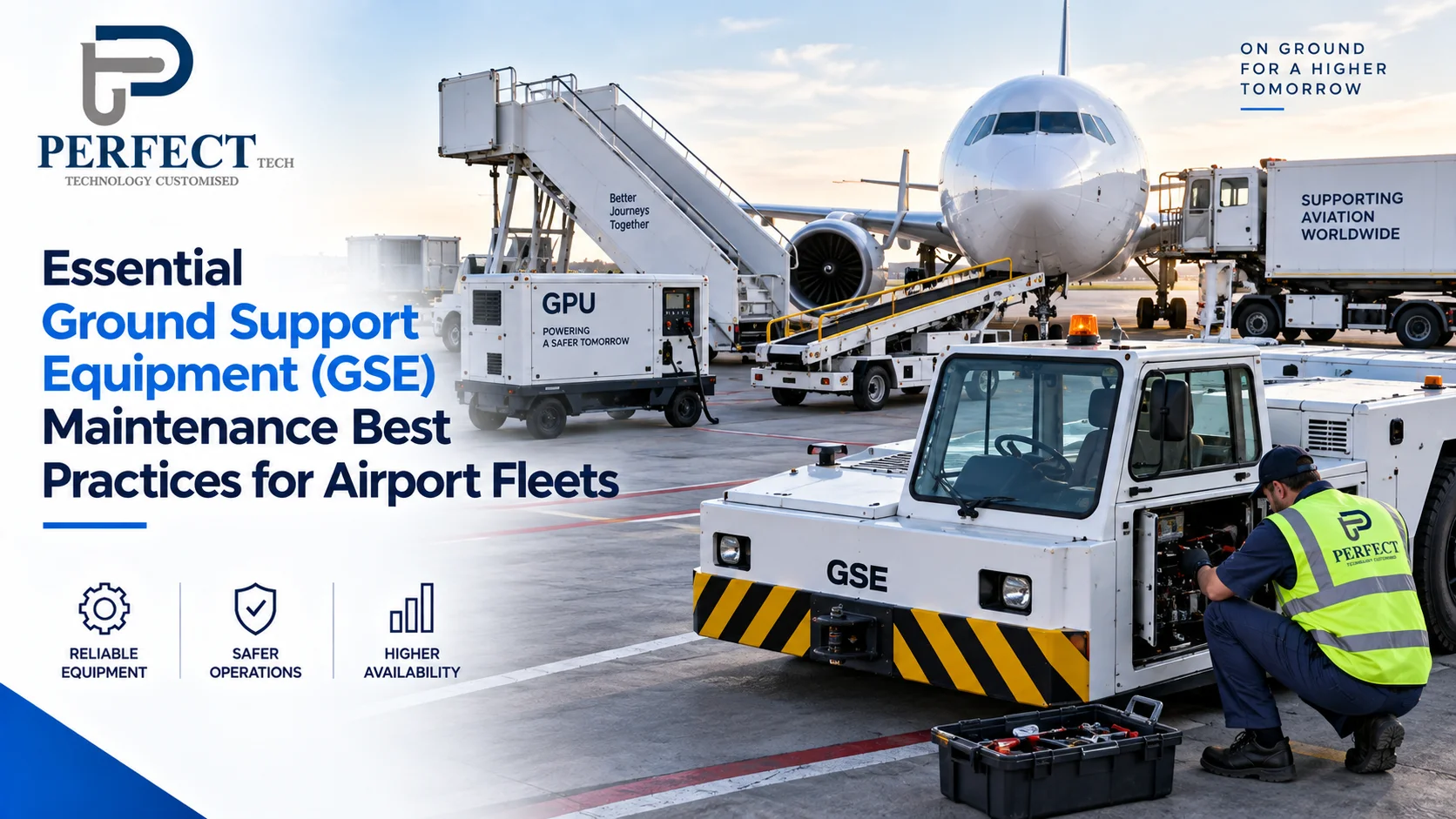
Airport operations depend on a complex network of Ground Support Equipment (GSE) to keep aircraft turnaround activities safe, efficient, and on schedule. From baggage tractors and ground power units to aircraft tow tractors, air start units, belt loaders, and passenger boarding equipment, every GSE asset has an important operational role.
A failed piece of equipment can quickly create delays, increase maintenance costs, and affect aircraft turnaround operations. This makes aviation Ground Support Equipment maintenance an essential part of airport fleet management.
For airport operations directors, GSE fleet managers, maintenance engineers, and procurement teams, a structured maintenance program can help improve equipment availability, identify developing faults, and ensure critical spare parts are available when needed.
What Is Ground Support Equipment Maintenance?
Ground Support Equipment maintenance involves the inspection, servicing, repair, testing, and replacement of components used on equipment that supports aircraft and airport ground operations.
Airport GSE can include:
- Ground Power Units (GPUs)
- Aircraft tow tractors
- Pushback tractors
- Baggage tractors
- Belt loaders
- Air start units
- Passenger stairs
- Catering trucks
- Lavatory service vehicles
- Water service vehicles
- Aircraft de-icing equipment
- Forklifts
- Maintenance platforms
Each equipment category has different mechanical, hydraulic, electrical, and control-system requirements.
A successful maintenance program therefore needs to be based on the specific equipment and operating environment rather than a one-size-fits-all schedule.
Why Aviation Ground Support Equipment Maintenance Matters
Airport GSE operates in demanding conditions.
Equipment may experience:
- Long operating hours
- Frequent starting and stopping
- Heavy loads
- Vibration
- Dust and debris
- Extreme temperatures
- Moisture
- Corrosive environments
- Tight turnaround schedules
Poor maintenance can increase the risk of equipment breakdowns at precisely the time when the equipment is needed.
Effective aviation Ground Support Equipment maintenance can help airport operators:
- Improve equipment availability
- Reduce unexpected breakdowns
- Identify component wear earlier
- Control maintenance costs
- Improve operational reliability
- Support workplace safety
- Extend equipment service life
- Improve spare-parts planning
1. Create Equipment-Specific Preventive Maintenance Schedules
One of the foundations of effective GSE fleet maintenance is preventive maintenance.
Instead of waiting for equipment to fail, maintenance teams should inspect and service equipment according to manufacturer recommendations and actual operating conditions.
A maintenance schedule can include:
Daily Checks
Operators or technicians can inspect:
- Fluid levels
- Tyre condition
- Brakes
- Warning lights
- Battery condition
- Hydraulic leaks
- Visible damage
- Emergency-stop systems
- Safety devices
Weekly Checks
Depending on equipment type, weekly inspections may include:
- Battery terminals
- Hydraulic hoses
- Belts
- Filters
- Lubrication points
- Electrical connections
- Control switches
- Structural components
Periodic Maintenance
Scheduled maintenance can include:
- Oil and filter changes
- Hydraulic-system servicing
- Brake inspection
- Battery testing
- Electrical-system testing
- Engine servicing
- Control-system diagnostics
- Component replacement
The exact interval should always follow the equipment manufacturer’s requirements.
2. Inspect Ground Power Units Regularly
Ground Power Units are critical for supplying electrical power to aircraft while they are on the ground.
Depending on the GPU type, maintenance teams should monitor:
- Output voltage
- Frequency
- Engine performance
- Battery condition
- Cooling system
- Electrical connections
- Cables and connectors
- Control modules
- Protective systems
For diesel-powered GPUs, engine maintenance should be integrated into the overall GSE maintenance schedule.
Electrical GPUs also require appropriate inspection of power electronics, cooling systems, connectors, cables, and control equipment.
Why GPU Maintenance Is Important
A GPU that cannot provide the required electrical output can affect aircraft ground operations and may require alternative equipment to be deployed.
Regular testing can help identify developing electrical or mechanical issues before they become operational problems.
3. Maintain Batteries and Charging Systems
Battery-powered GSE is increasingly common across airport operations.
Battery maintenance should cover:
- Battery condition
- State of charge
- Charging performance
- Terminal connections
- Cable condition
- Battery temperature
- Charger operation
- Warning indicators
For applicable battery technologies, maintenance teams should follow the battery and equipment manufacturer’s safety and servicing requirements.
Charging infrastructure should also be inspected because a healthy battery cannot compensate for a faulty charging system.
4. Inspect Hydraulic Systems
Hydraulic systems are used extensively across GSE applications.
Examples include:
- Belt loaders
- Passenger stairs
- Cargo equipment
- Catering equipment
- Hydraulic lifting systems
- Specialized airport vehicles
Inspect hydraulic systems for:
- Fluid leaks
- Damaged hoses
- Worn seals
- Loose fittings
- Abnormal pressure
- Contamination
- Cylinder damage
A small hydraulic leak can become a significant failure if it is ignored.
Maintenance teams should also use the correct hydraulic fluid specified by the equipment manufacturer.
5. Check Tyres, Brakes, and Steering Systems
Ground vehicles operate around aircraft, personnel, buildings, and other airport equipment.
This makes vehicle-control systems particularly important.
Regularly inspect:
- Tyre condition
- Tyre pressure
- Wheel assemblies
- Brake pads
- Brake discs or drums
- Brake fluid
- Steering components
- Suspension components
Any defect affecting braking or steering should be assessed according to the equipment manufacturer’s maintenance and airport safety procedures before the equipment returns to service.
6. Maintain Engines and Fuel Systems
Diesel and gasoline-powered GSE require regular engine maintenance.
Depending on the equipment, maintenance can include:
- Engine oil inspection
- Oil-filter replacement
- Air-filter inspection
- Fuel-filter replacement
- Cooling-system checks
- Belt inspection
- Hose inspection
- Battery testing
- Fuel-system inspection
Fuel contamination can create significant problems in diesel-powered equipment.
Airport fleet managers should maintain appropriate fuel-storage and handling procedures to reduce contamination and water-related issues.
7. Inspect Electrical and Control Systems
Modern GSE increasingly depends on electronic control systems.
Control modules may monitor and manage:
- Engine operation
- Hydraulic systems
- Safety interlocks
- Vehicle movement
- Charging systems
- Electrical output
- Fault conditions
Maintenance teams should inspect:
- Wiring harnesses
- Connectors
- Fuses
- Relays
- Sensors
- Control modules
- Displays
- Emergency-stop circuits
Intermittent electrical faults can be particularly difficult to diagnose, so documenting fault codes and operating conditions can help technicians identify recurring problems.
8. Use Condition-Based Maintenance Where Appropriate
Preventive maintenance is based primarily on scheduled intervals.
Condition-based maintenance adds another layer by using actual equipment condition to determine when maintenance may be required.
Depending on the GSE type, maintenance teams can monitor:
- Engine hours
- Battery performance
- Hydraulic pressure
- Temperature
- Vibration
- Fault codes
- Charging cycles
- Brake condition
- Component wear
This approach can help maintenance teams identify equipment requiring attention before a major failure occurs.
9. Maintain Accurate GSE Service Records
Good documentation is an essential part of fleet maintenance.
For each piece of equipment, maintain records of:
- Equipment model
- Serial number
- Manufacturer
- Operating hours
- Maintenance dates
- Fault history
- Replaced components
- Spare-part numbers
- Inspection results
- Technician observations
Digital maintenance-management systems can make this information easier to track across large airport fleets.
Historical records can also help identify components that repeatedly fail or equipment that requires unusually frequent maintenance.
10. Manage GSE Spare Parts Proactively
Spare-parts availability can have a direct impact on equipment downtime.
Airport maintenance teams should identify critical components such as:
- Control modules
- Starter motors
- Alternators
- Voltage regulators
- Sensors
- Relays
- Solenoid valves
- Hydraulic components
- Filters
- Belts
- Electrical connectors
- Battery components
Critical spare parts should be prioritized according to equipment importance, failure history, lead time, and availability.
Why Part Identification Matters
Ordering an industrial or aviation spare part based only on appearance can result in compatibility problems.
Before ordering, provide:
- Equipment manufacturer
- Equipment model
- Serial number
- Existing component part number
- Component photographs
- Technical specifications
- Wiring information, where relevant
This information can help suppliers identify the appropriate replacement component.
11. Inspect GSE Before and After Heavy Use
Equipment operating for extended periods may require additional inspections.
After demanding operating cycles, check for:
- Fluid leaks
- Excessive heat
- Abnormal noise
- Vibration
- Damaged hoses
- Loose fasteners
- Electrical faults
- Brake wear
- Tyre damage
Early detection can prevent relatively small defects from developing into major repairs.
12. Train GSE Operators
Maintenance does not begin in the workshop.
Equipment operators are often the first people to notice unusual behavior.
Operators should know how to identify:
- Unusual sounds
- Warning lights
- Fluid leaks
- Slow hydraulic movement
- Brake problems
- Steering problems
- Starting difficulties
- Battery warnings
- Abnormal vibration
Operators should report defects promptly rather than continuing to operate equipment that may be unsafe or unreliable.
13. Follow Airport Safety and Equipment Procedures
Airport environments require strict coordination between equipment operation and safety procedures.
Maintenance teams should follow applicable:
- Airport procedures
- Equipment manufacturer instructions
- Occupational safety requirements
- Electrical safety procedures
- Lockout/tagout procedures where applicable
- Inspection requirements
- Environmental requirements
Maintenance should only be performed by appropriately trained and authorized personnel.
14. Pay Attention to Environmental Conditions
GSE can operate in environments where equipment is exposed to weather, dust, moisture, and temperature changes.
These conditions can affect:
- Electrical connectors
- Batteries
- Hydraulic seals
- Wiring
- Engine cooling
- Lubricants
- Metal components
Equipment operating in harsh environments may require inspection intervals that reflect actual operating conditions rather than relying solely on generic schedules.
Common GSE Maintenance Problems
Several recurring issues can affect airport fleets.
Battery Failure
Possible causes include:
- Poor charging
- Age
- Loose terminals
- Excessive discharge
- Charger problems
Hydraulic Leakage
Possible causes include:
- Damaged hoses
- Worn seals
- Loose fittings
- Excessive pressure
- Component wear
Electrical Faults
Possible causes include:
- Corroded connectors
- Damaged wiring
- Faulty sensors
- Blown fuses
- Control-module problems
Engine Starting Problems
Possible causes include:
- Weak batteries
- Fuel-system issues
- Starter problems
- Sensor faults
- Poor maintenance
Brake Problems
Possible causes include:
- Worn friction components
- Hydraulic problems
- Incorrect adjustment
- Contamination
- Component failure
The correct diagnosis should be based on the equipment manufacturer’s troubleshooting procedures.
Building a GSE Maintenance Checklist
A practical airport fleet checklist can be divided into several categories.
| Maintenance Area | Key Checks |
|---|---|
| Engine | Oil, filters, belts, coolant, fuel |
| Electrical | Battery, wiring, fuses, connectors |
| Hydraulic | Fluid, hoses, seals, cylinders |
| Brakes | Pads, discs/drums, fluid, operation |
| Steering | Linkages, components, response |
| Tyres | Pressure, wear, damage |
| Controls | Displays, switches, modules, alarms |
| Safety | Emergency stops, warning systems, guards |
| Structure | Cracks, corrosion, loose components |
| Documentation | Service history, faults, parts replaced |
The exact inspection requirements should be adapted to each GSE type.
How to Reduce Unexpected GSE Downtime
Reducing downtime requires more than repairing equipment quickly after a failure.
Airport fleet managers should focus on:
Preventive Maintenance
Perform scheduled inspections and servicing before components reach failure conditions.
Fault History Analysis
Review recurring failures to identify equipment or components requiring additional attention.
Critical Spare-Part Stock
Maintain appropriate inventory for components with long procurement lead times or high operational importance.
Accurate Equipment Records
Keep serial numbers, model information, and part numbers readily available.
Technician Training
Ensure maintenance personnel understand the specific systems used across the fleet.
Supplier Support
Develop reliable sourcing channels for critical aviation and industrial spare parts.
How Perfect Tech Supports Aviation GSE Spare Parts Sourcing
Perfect Tech provides industrial spare-parts sourcing and technical part-matching support for businesses operating generators, heavy machinery, and Ground Support Equipment.
For airport maintenance and procurement teams, accurate component identification can help reduce delays caused by incorrect spare-part orders.
When requesting a GSE component, provide:
- Equipment manufacturer
- Equipment model
- Serial number
- Component part number
- Nameplate photograph
- Component photograph
- Technical specifications
- Existing wiring or connector information where applicable
Our team can assist with identifying and sourcing components such as:
- GSE control modules
- Voltage regulators
- Alternators
- Starter motors
- Sensors
- Relays
- Electrical components
- Hydraulic components
- Generator components
- Other industrial and aviation spare parts
Frequently Asked Questions
What is aviation Ground Support Equipment maintenance?
Aviation Ground Support Equipment maintenance involves inspecting, servicing, repairing, and replacing components on equipment used to support aircraft and airport ground operations.
How often should airport GSE be serviced?
Service intervals depend on the equipment type, manufacturer recommendations, operating hours, environmental conditions, and fleet operating requirements.
What GSE components require regular inspection?
Important areas include engines, batteries, electrical systems, hydraulic systems, brakes, tyres, steering, safety systems, control modules, and structural components.
Why is preventive maintenance important for airport GSE?
Preventive maintenance helps identify wear and developing faults before they become major equipment failures, supporting equipment availability and operational reliability.
Should airports keep critical GSE spare parts in stock?
Critical spare-parts inventory should be determined according to equipment importance, failure history, supplier lead times, and operational requirements.
How can I identify the correct GSE spare part?
Provide the equipment manufacturer, model, serial number, existing component part number, and clear photographs or technical documentation whenever possible.
Conclusion
Effective aviation Ground Support Equipment maintenance requires a structured approach combining preventive inspections, condition monitoring, accurate documentation, operator training, safety procedures, and proactive spare-parts planning.
Airport fleets operate under demanding conditions, making early fault detection particularly important. Regular inspection of engines, batteries, hydraulic systems, brakes, electrical components, control modules, and safety systems can help maintenance teams identify problems before they develop into costly operational disruptions.
For airport operators and GSE maintenance teams, accurate spare-part identification is equally important. Having the correct technical information available can make the sourcing process faster and reduce the risk of receiving an incompatible component.
If you need reliable sourcing support for aviation Ground Support Equipment spare parts, contact Perfect Tech. Share your GSE model, component part number, nameplate, or equipment photographs, and our team can assist with technical part matching and industrial spare-parts sourcing.
